

Innovations in Homecare Nursing: Harnessing Technology for Better Care
In the world of healthcare, home nursing plays a crucial role in providing personalized care and support to individuals within the comfort of their homes. With advancements in technology, the landscape of home nursing is witnessing transformative innovations, empowering both patients and caregivers alike. These innovations not only enhance the quality of care but also improve the overall efficiency and accessibility of healthcare services. Let’s delve into some of the groundbreaking technological advancements revolutionizing home nursing.
Telehealth and Remote Monitoring: One of the most significant innovations in-home nursing is the integration of telehealth and remote monitoring solutions. Through the use of telecommunication technologies, patients can now receive real-time medical assistance and consultations from healthcare professionals without the need for in-person visits. Remote monitoring devices, such as wearable sensors and smart home health monitors, enable nurses to track vital signs, medication adherence, and disease progression from a distance. This continuous monitoring not only facilitates early intervention but also promotes proactive healthcare management, reducing the likelihood of hospital readmissions and complications.
Mobile Health Applications: The proliferation of mobile health applications has revolutionized how patients engage with their healthcare providers and manage their well-being. Home nursing agencies are increasingly leveraging mobile apps to streamline communication, schedule appointments, and deliver personalized care plans directly to patients’ smartphones or tablets. These apps often feature medication reminders, symptom trackers, and educational resources, empowering patients to take an active role in their health management. Moreover, some apps utilize artificial intelligence algorithms to analyze health data and provide personalized recommendations, further enhancing the efficacy of home nursing interventions.
Robotics and Automation: Advancements in robotics and automation have ushered in a new era of efficiency and precision in-home nursing. Robots equipped with AI capabilities can assist with activities of daily living, such as bathing, dressing, and meal preparation, alleviating the burden on caregivers and fostering greater independence for patients with mobility impairments or chronic conditions. Additionally, robotic telepresence systems enable remote healthcare professionals to virtually interact with patients and perform assessments through high-definition video conferencing, bridging geographical barriers and expanding access to specialized care.
Internet of Things (IoT) and Smart Home Technology: The Internet of Things (IoT) has revolutionized the concept of smart homes, offering unprecedented levels of connectivity and automation in-home nursing. IoT devices, such as smart thermostats, motion sensors, and security cameras, can be integrated into home healthcare systems to create ambient assisted living environments. These interconnected devices can monitor environmental conditions, detect falls or emergencies, and even adjust lighting and temperature settings based on patients’ preferences and activity patterns. By harnessing the power of IoT, home nursing providers can create safer, more comfortable living spaces that promote health and well-being.
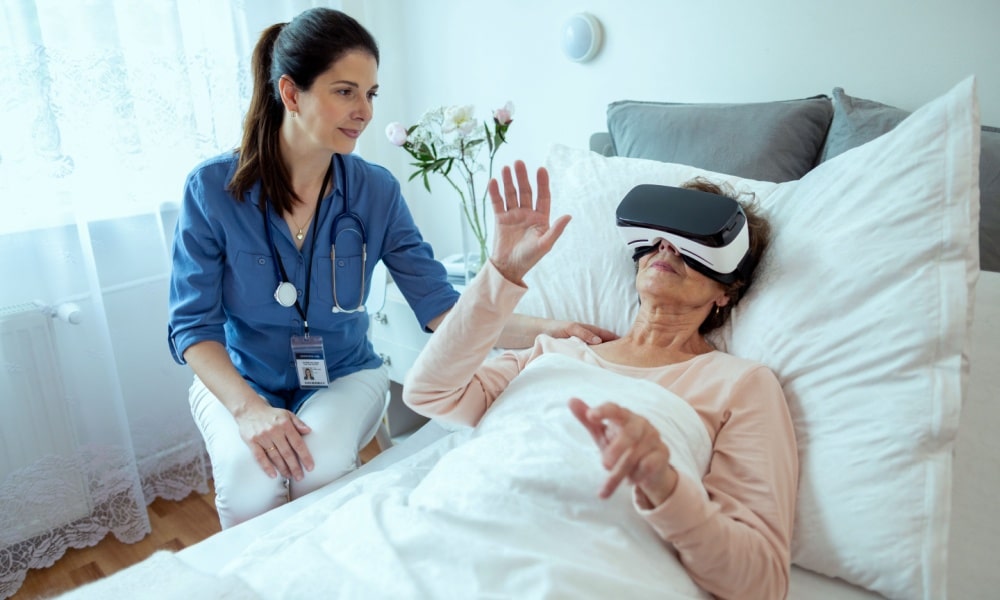
Virtual Reality (VR) and Augmented Reality (AR): Virtual reality (VR) and augmented reality (AR) technologies hold immense potential in enhancing the delivery of home nursing services, particularly in the realm of patient education and rehabilitation. VR simulations can transport patients to immersive environments where they can learn about their medical conditions, practice relaxation techniques, or undergo virtual therapy sessions. Similarly, AR applications can overlay digital information onto the real world, providing visual aids and interactive guides for medication administration, wound care, and physical exercises. These immersive technologies not only enhance patient engagement but also improve learning retention and treatment outcomes.
In conclusion, innovations in homecare nursing are reshaping the landscape of healthcare delivery, empowering patients to receive high-quality care in the comfort of their own homes. By harnessing the power of technology, home nursing agencies can optimize resource utilization, improve care coordination, and ultimately enhance the well-being of their patients. As these technological advancements continue to evolve, the future of home nursing holds promise for a more efficient, accessible, and patient-centered healthcare experience.